You have the right skills, good experience, and a strong desire to work in Germany. You have sent dozens of applications but have received few or no replies. This is a common and frustrating experience for many migrants. The reason is often not your qualifications, but small, avoidable mistakes in your application documents.
German hiring culture places a very high value on precision, rules, and formality. Your application is seen as your first work sample. An error in your documents suggests to a recruiter that your professional work might also be careless. This guide covers the most common mistakes English-speaking applicants make and provides concrete examples on how to fix them.
Why Small Mistakes Matter in a German Bewerbung
A German job application, known as a Bewerbung, is more than just a CV and a cover letter. It is a formal package of documents that must be complete and correct. According to the German Federal Employment Agency (Bundesagentur für Arbeit), incomplete or error-filled applications are a primary reason for rejection.
Recruiters often review hundreds of applications for a single position. They use small mistakes as an efficient way to filter candidates. A typo, an incorrect form of address, or a poorly formatted document can disqualify you before anyone even reads about your experience. Following the rules shows that you are diligent and culturally aware.
Mistake Category 1: The Cover Letter (Anschreiben)
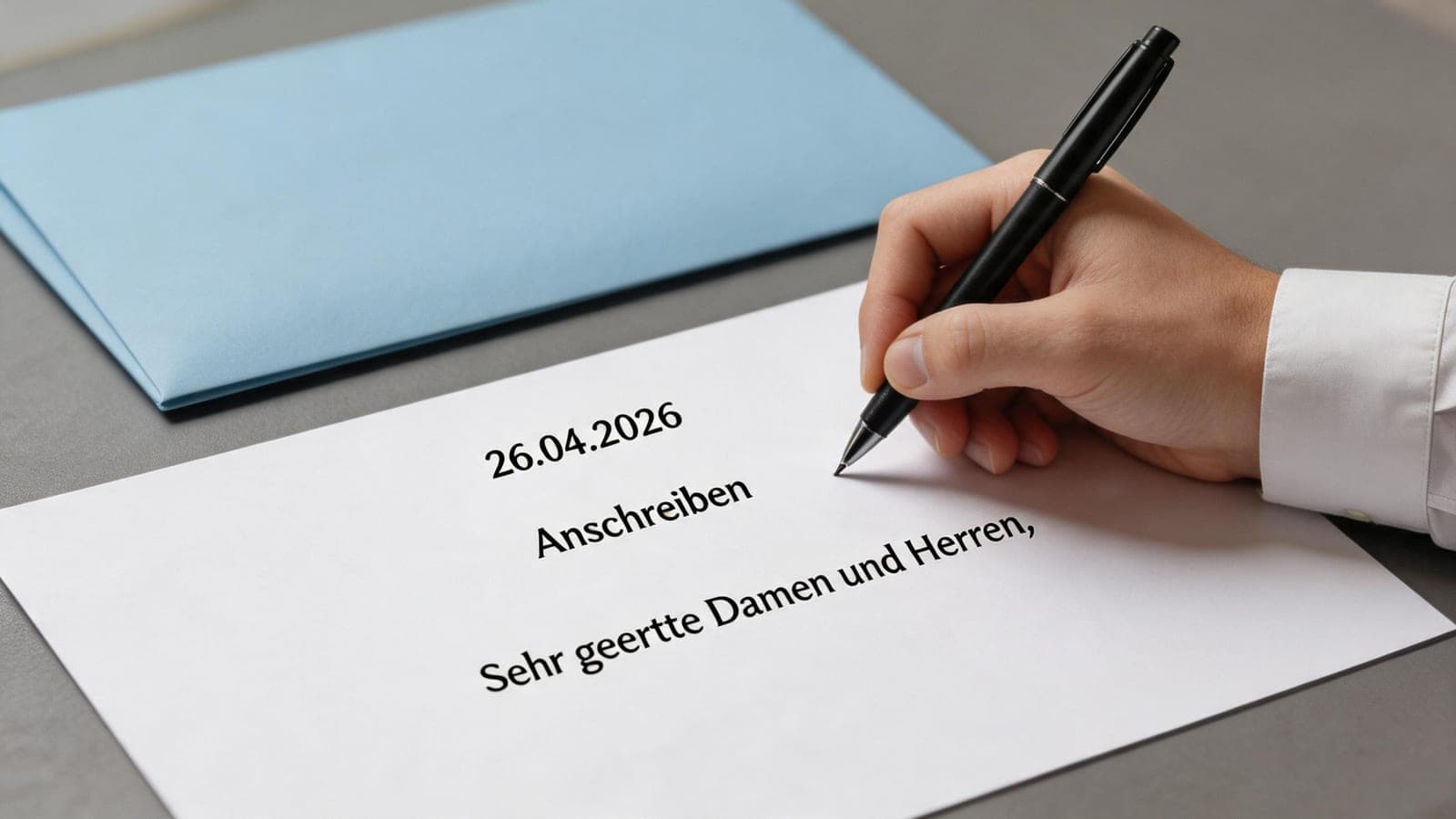
The Anschreiben (cover letter) is your first opportunity to make a direct impression. This is where many cultural and language mistakes occur.
Using an Outdated Opening Sentence
- The Mistake: Starting your letter with the phrase "Hiermit bewerbe ich mich um die Stelle als..." (I hereby apply for the position of...). This phrase is grammatically correct but is considered passive, old-fashioned, and uninspired.
- The Fix: Start with an active sentence that immediately shows your motivation or connection to the company. This demonstrates confidence and genuine interest.
- Example: Instead of the passive opener, write something like, "Ihre innovative Arbeit im Bereich der erneuerbaren Energien verfolge ich mit großem Interesse und möchte meine Erfahrung als Projektingenieur aktiv in Ihr Team einbringen."
Incorrect Salutations and Formality
- The Mistake: Using informal greetings like "Hallo Herr Schmidt," or generic ones like "Dear Hiring Team." Another common error for English speakers is not capitalizing the formal "you" (Sie) and its related forms (Ihnen, Ihr).
- The Fix: Always use the formal and correct salutation. Research the name of the contact person in the job ad or on the company website. If you cannot find a name, use the general formal address.
- Example: Correct forms are "Sehr geehrte Frau Müller," or "Sehr geehrter Herr Bauer." If no contact person is listed anywhere, use "Sehr geehrte Damen und Herren."
Omitting the Subject Line (Betreff)
- The Mistake: Forgetting to include a Betreff (subject line) between the recipient's address and the salutation. This line is a standard part of any formal German letter.
- The Fix: The subject line should clearly state the purpose of your letter. It includes the position title and, if available, the reference number from the job advertisement.
- Example: Betreff: Bewerbung als Softwareentwickler (Kennziffer 12345)
Mistake Category 2: The CV (Lebenslauf)
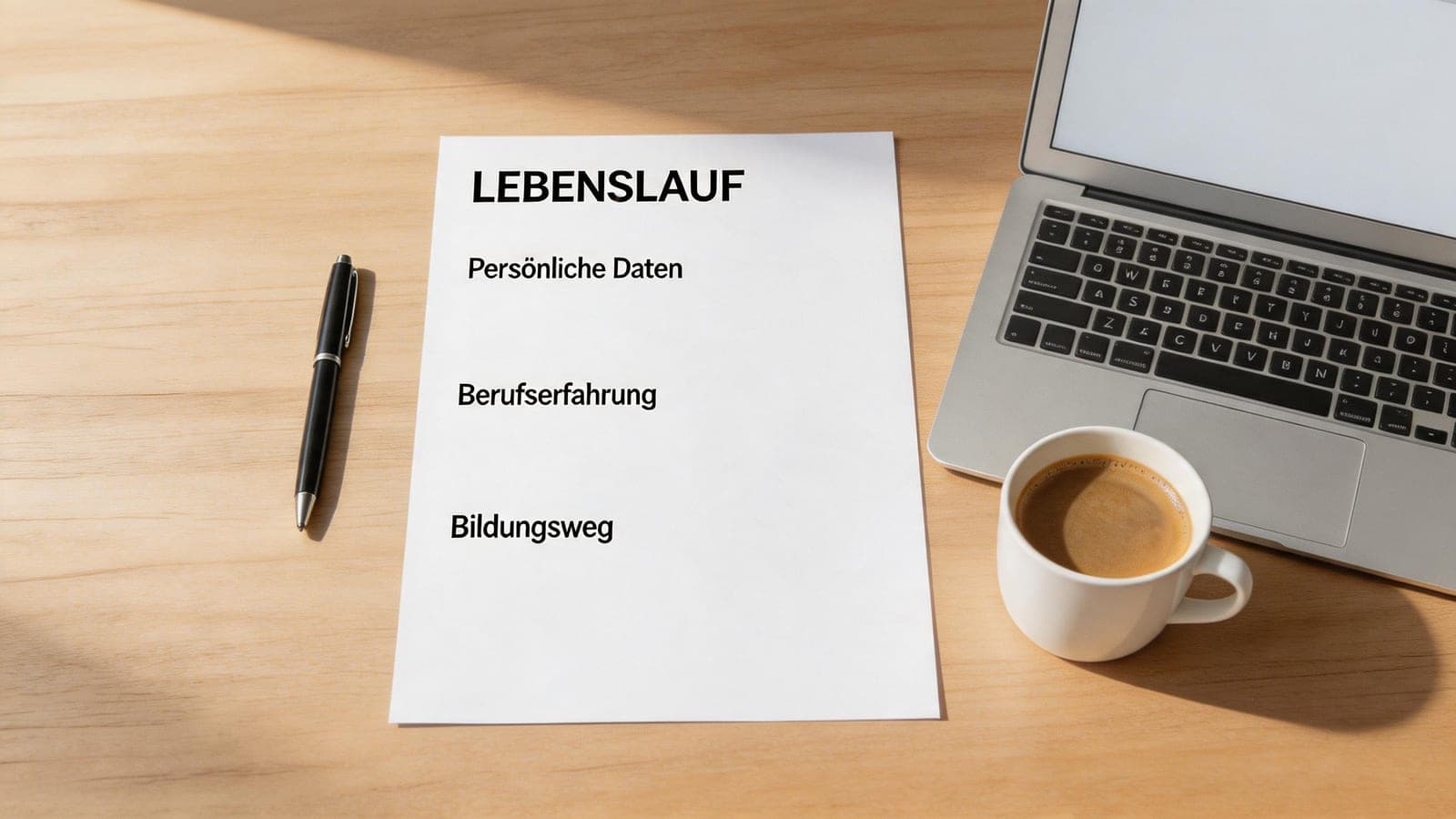
The German Lebenslauf (CV) has a strict, tabular format that values facts over storytelling. Directly translating an English-style CV is a guaranteed way to be rejected.
Submitting a Translated English-Style CV
- The Mistake: Keeping the format of a typical US or UK CV, which might include a personal summary, career objective, or long descriptive paragraphs about job roles.
- The Fix: Rebuild your CV from scratch using the German standard: a tabular layout with dates on the left and information on the right, in reverse chronological order. Use concise bullet points, not sentences.
- Example: A job entry should look like this: 03/2022 – heute | Position Title | Company Name, City. Below this, list 2-4 bullet points describing your key tasks with quantifiable results.
Using an Unprofessional Photo
- The Mistake: Including a selfie, a cropped photo from a social event, or no photo at all. While the German General Equal Treatment Act (AGG) makes photos non-mandatory, most employers still expect one.
- The Fix: Invest in a professional headshot taken by a photographer. You should be dressed in business attire with a neutral background. This small investment signals professionalism.
- Example: The photo should be placed in the top right corner of the first page of your Lebenslauf.
Missing a Signature and Complete Dates
- The Mistake: Failing to sign your Lebenslauf or providing vague date ranges like "2021-2023." An unsigned document is considered incomplete.
- The Fix: At the bottom of the last page, add the city, the current date, and your signature. For PDF applications, you can insert a scanned image of your signature. All date ranges for work and education must be in the format MM/YYYY – MM/YYYY.
- Example: Below your last entry, add a line: "Berlin, 15.10.2026" followed by your signature.
Mistake Category 3: Language and Grammar
Language errors are the quickest way for a recruiter to see that you are not a native speaker. While some mistakes are expected, common and basic errors show a lack of care. This is especially true for English speakers, who often directly translate idioms or grammatical structures.
| ✗Hallo Herr Schmidt, | ✓Sehr geehrter Herr Schmidt, | The greeting 'Hallo' is too informal for a job application. Always use 'Sehr geehrte/r...' |
| ✗Ich würde gerne für Ihre Firma arbeiten. | ✓Ich möchte für Ihr Unternehmen arbeiten. | Overusing Konjunktiv II ('würde') sounds hesitant. The indicative ('möchte') is more confident. |
| ✗Ich hoffe, bald von dir zu hören. | ✓Ich freue mich darauf, bald von Ihnen zu hören. | Never use the informal 'du/dir' address. Always use the formal 'Sie/Ihnen'. |
| ✗Das macht Sinn für mich. | ✓Das ist für mich sinnvoll. / Das ergibt Sinn. | This is a direct translation from 'that makes sense.' The correct German phrasing is different. |
| ✗Mein lebenslauf ist beigefügt. | ✓Meinen Lebenslauf finden Sie im Anhang. | Nouns in German are always capitalized ('Lebenslauf'). 'Im Anhang' is the standard phrase for attachments. |
| ✗Danke für ihre Zeit. | ✓Vielen Dank für Ihre Zeit. | The formal 'your' (Ihre) must be capitalized. 'Vielen Dank' is more formal than 'Danke'. |
| ✗Ich bin ein harter Arbeiter. | ✓Ich zeichne mich durch eine hohe Arbeitsmoral aus. | A direct translation of 'hard worker' sounds unnatural. The correct phrasing describes your work ethic. |
| ✗Hiermit bewerbe ich mich... | ✓Mit großem Interesse habe ich Ihre Anzeige gelesen... | The 'Hiermit' opening is outdated. Start with an active, engaging sentence. |
Mistake Category 4: Document and File Management
How you prepare and send your documents says a lot about your organizational skills. Simple mistakes here can prevent your application from even being opened.
Sending Multiple Separate Files
- The Mistake: Attaching five or more separate PDF files for the cover letter, CV, university diploma, language certificate, and work references.
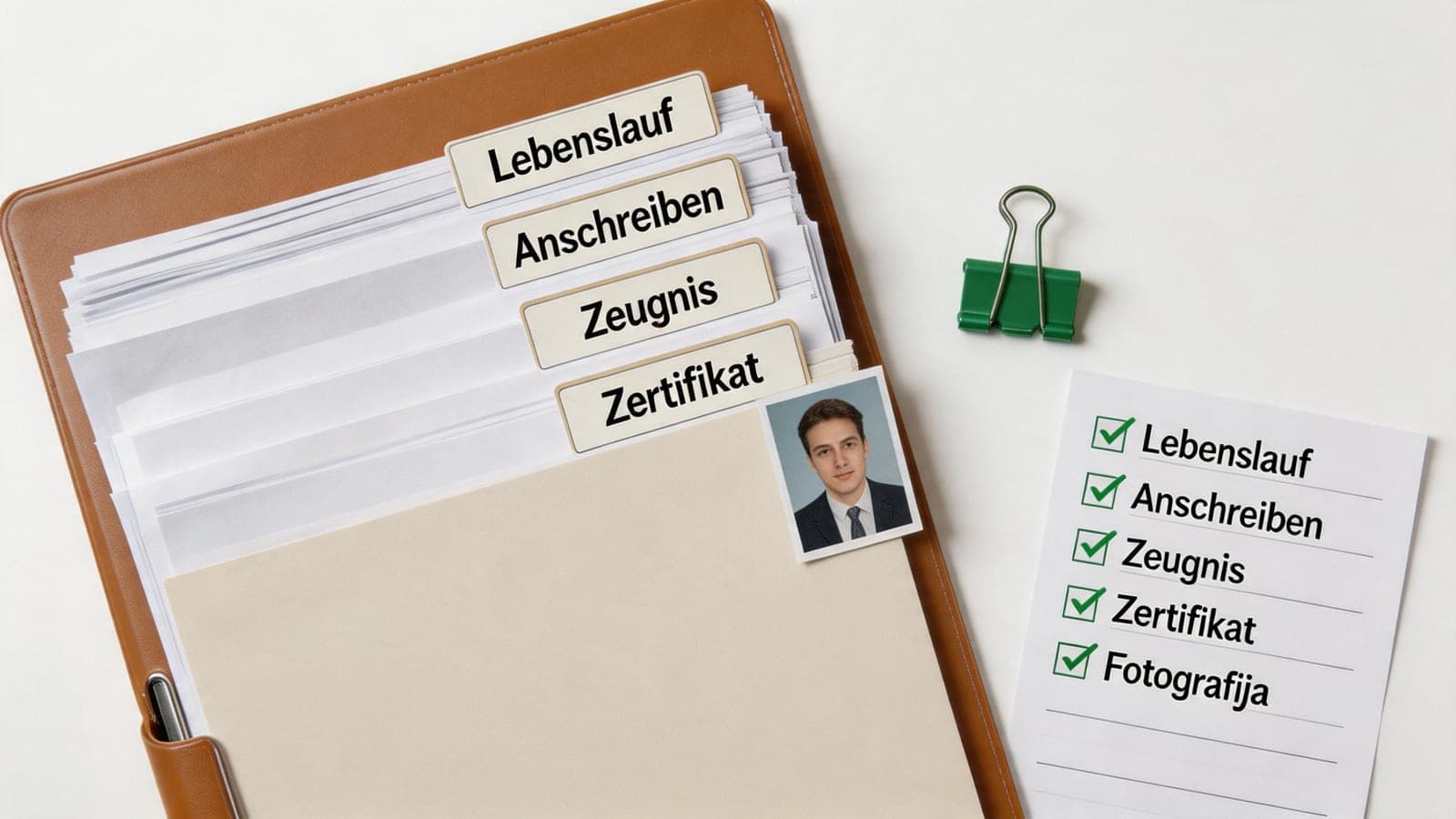
- The Fix: Combine all your documents into a single, logically ordered PDF file. The correct order is: Anschreiben, Lebenslauf, then all certificates (Zeugnisse) in reverse chronological order (newest first).
- Example: Your final file should be a single PDF containing everything.
Using Generic or Unprofessional File Names
- The Mistake: Naming your application file "CV.pdf" or "MyApplication.pdf". This makes it difficult for the recruiter to manage and looks unprofessional.
- The Fix: Use a clear and descriptive file name that includes your name, the position, and the document type.
- Example: A good file name would be: Bewerbung_Project-Manager_Max-Mustermann.pdf.
Submitting Oversized Files
- The Mistake: Sending a PDF that is 10 MB or larger. Many company email servers have size limits for attachments and may automatically reject your email.
- The Fix: Keep your total file size under 5 MB. Scan your documents at a reasonable resolution (150-300 dpi is usually sufficient) and use an online PDF compressor if necessary.
Forgetting German-Specific Documents
- The Mistake: Not including an Arbeitszeugnis (work reference letter) if you have previously worked in Germany, or failing to provide a Sprachzertifikat (language certificate) to prove your German level.
- The Fix: The Arbeitszeugnis is a critical document in Germany. Always include it. If you only have experience from abroad, provide translated letters of recommendation. If the job requires a certain language level (e.g., B2 German), your Sprachzertifikat is essential proof.
Mistake Category 5: Application Process and Etiquette
The mistakes are not limited to the documents themselves. How you conduct yourself during the application process is also under scrutiny.
Sending Mass Applications
- The Mistake: Using the exact same cover letter and CV for 50 different jobs. Recruiters can easily spot a generic application that has not been tailored to their company or the specific role.
- The Fix: Focus on quality over quantity. Customize your Anschreiben for every single application, referencing the company and the specific requirements listed in the job ad. This shows genuine interest.
Not Checking Your Spam Folder
- The Mistake: This is a simple but surprisingly common error. Many companies use automated systems to send acknowledgments or interview invitations, and these emails often get filtered into spam or junk folders.
- The Fix: After you apply for a job, make it a habit to check your spam folder every day. You could miss an important communication from a potential employer.
Ghosting an Employer
- The Mistake: Receiving an interview invitation or even a job offer and never responding because you are no longer interested or have accepted another position.
- The Fix: Always respond professionally and promptly. If you wish to withdraw your application, send a brief, polite email thanking them for their time. Germany's business world can be small, and maintaining a professional reputation is important.
Conclusion: Your Application Is a Reflection of Your Work Ethic
In the German job market, your application is more than a summary of your experience; it is a demonstration of your professionalism, attention to detail, and ability to follow instructions. By avoiding these common mistakes, you show recruiters that you are a serious, diligent, and culturally aware candidate.
Take the time to adapt your documents to German standards, proofread them carefully, and manage the process with professionalism. This effort will significantly increase your chances of securing an interview and ultimately landing a job in Germany.