Applying for a job in Germany requires more than just a good CV. The German application process is formal and highly standardized. Employers expect a specific set of documents, presented in a precise format. This complete package is called a Bewerbung (job application), and its contents are known as the Bewerbungsunterlagen (application documents).
For migrants and foreign applicants, understanding these requirements is the first step toward success. A well-prepared application shows that you are professional, thorough, and understand German work culture. This guide provides a complete checklist of the documents you need and explains the purpose of each one.
The Complete Application Package (Bewerbungsmappe)
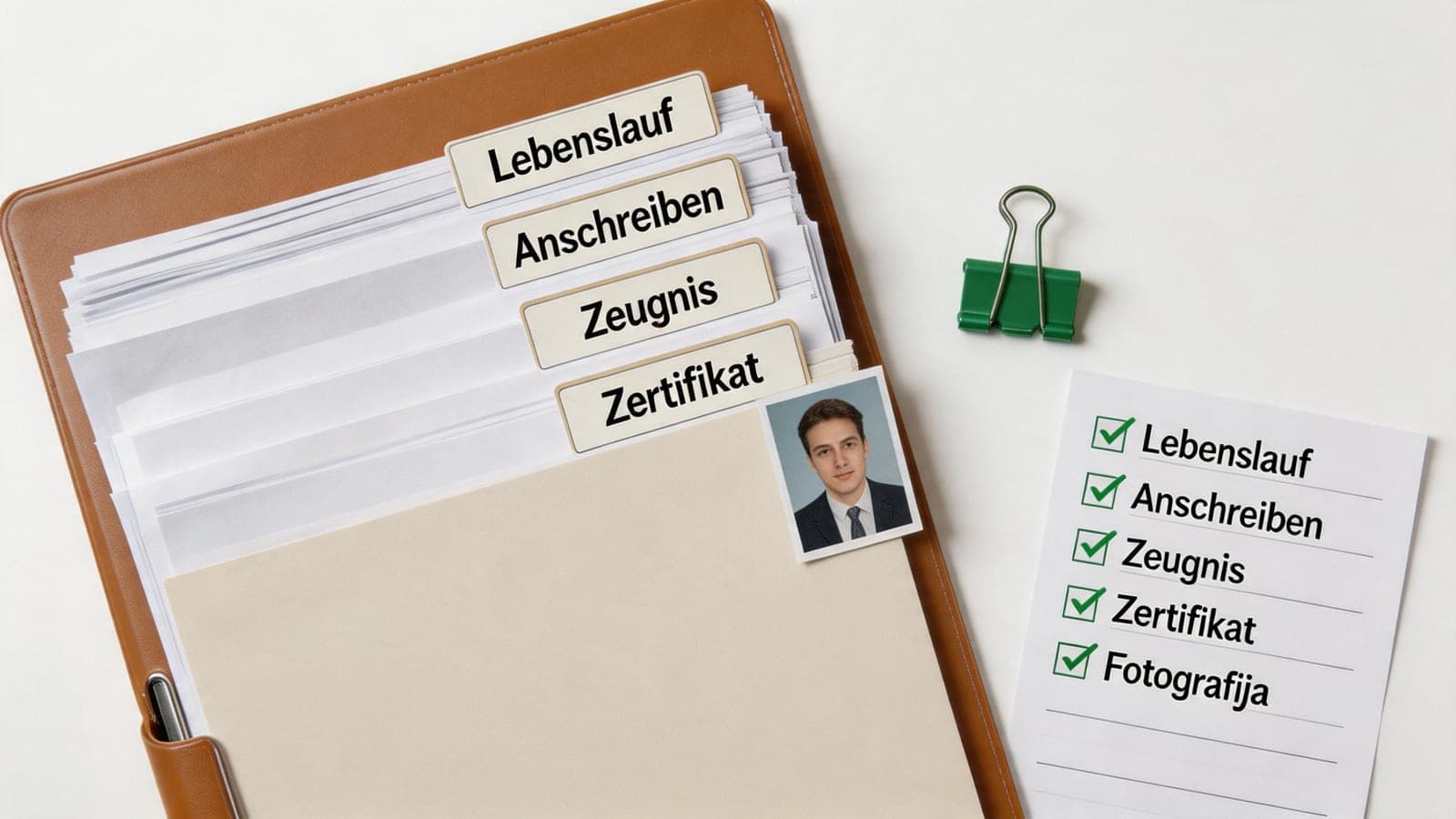
In the past, applications were sent as physical folders called a *Bewerbungsmappe*. Today, nearly all applications are submitted digitally via email or online portals. However, the principle remains the same: all your documents must be combined into a single, cohesive package.
- Format: All documents should be merged into one single PDF file. Do not send multiple separate files. This is a very common mistake.
- File Size: Keep the total file size under 5 MB. High-resolution photos and poorly compressed scans can easily exceed this limit. Use an online tool to compress your PDF if necessary.
- File Name: Name the file professionally and clearly. The standard format is `Bewerbung_FirstName_LastName_Position.pdf`. For example: `Bewerbung_John_Smith_SoftwareDeveloper.pdf`.
- Anschreiben (Cover Letter) — Required for most applications, unless the job ad says otherwise. Always tailor it to the specific role.
- Lebenslauf (CV / Résumé) — Always required. Must be in tabular format, reverse chronological, and signed with the current date.
- Arbeitszeugnisse (Work References) — Crucial if you have worked in Germany before. For foreign experience, use translated employment certificates.
- Abschlusszeugnisse (Diplomas) — Your highest relevant educational qualification (e.g., university degree, vocational school diploma).
- Sprachzertifikat (Language Certificate) — Proof of your German language skills (e.g., Goethe, telc B1/B2). Essential for most jobs.
- Anerkennung (Recognition of Qualifications) — The official document proving your foreign degree is equivalent to a German one. Highly important for regulated professions.
- Weitere Zertifikate (Other Certificates) — Forklift license (Staplerschein), software certifications, first aid courses, etc. Only include if relevant to the job.
- Aufenthaltstitel / Arbeitserlaubnis (Residence / Work Permit) — Proof of your legal right to work in Germany. Include it if you already have it.
- Bewerbungsfoto (Application Photo) — Legally optional, but still expected by most employers. Should be placed on the Lebenslauf.
Core Documents Explained
Every German application must contain a cover letter and a CV. These two documents are the foundation of your Bewerbung.
The Cover Letter (Anschreiben)
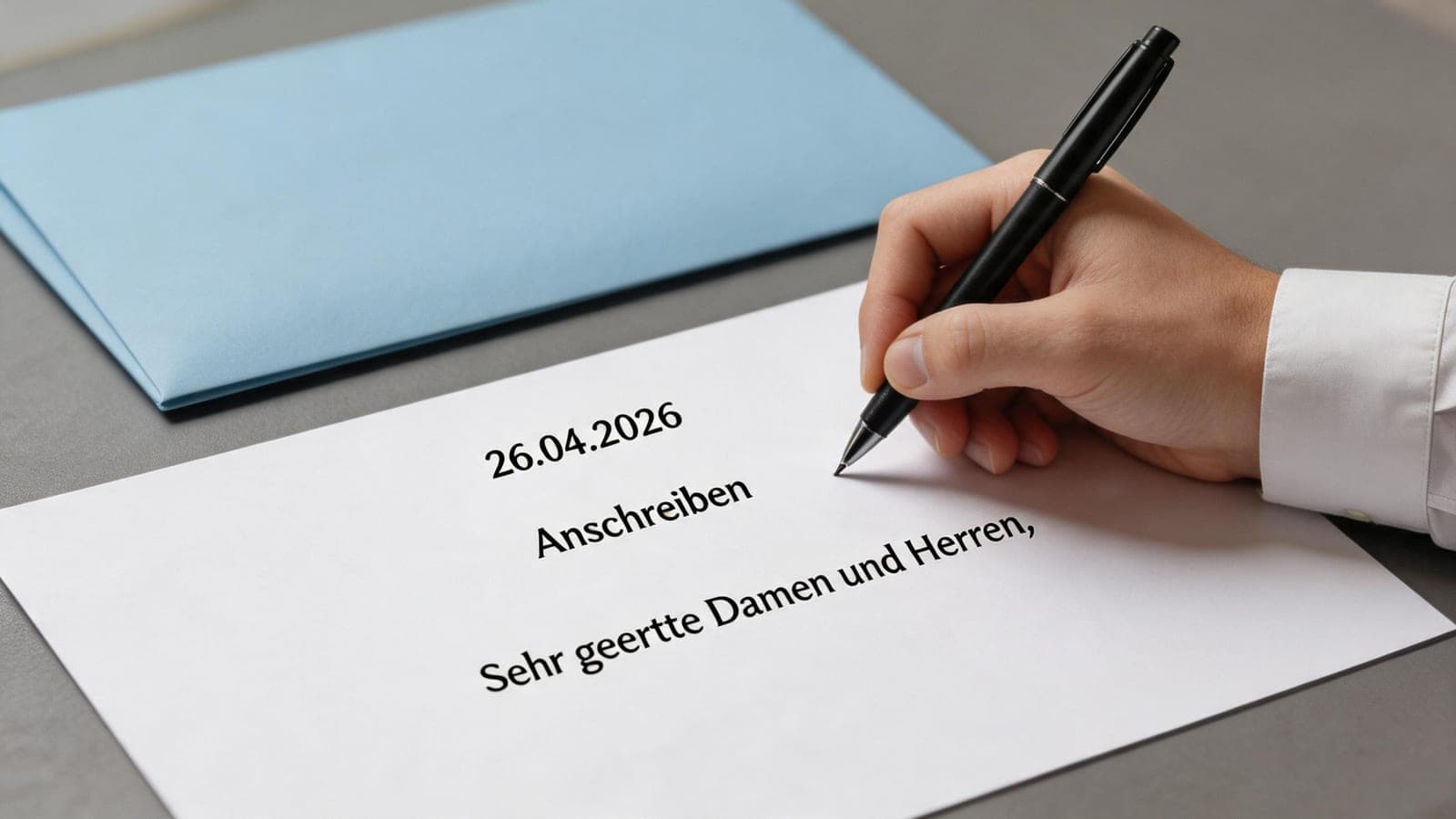
The Anschreiben (cover letter) is your formal introduction. It is a one-page document where you explain your motivation for applying and connect your skills directly to the job requirements listed in the advertisement. It is not a summary of your CV.
- Purpose: To show the employer why you are the right candidate for this specific job at this specific company.
- Length: Strictly 1 page maximum. A typical cover letter has 250-350 words.
- Requirement: Assume it is required unless the job ad explicitly states "no cover letter needed."
- Content: It should answer three questions: Why are you interested in this company? Why are you a good fit for this position? What are your key skills that match the job description?
The Anschreiben follows a formal business letter format, known as DIN 5008. This includes your address, the company's address, the date, a clear subject line, and a formal closing. It should be placed as the first page of your PDF application.
The Curriculum Vitae (Lebenslauf)
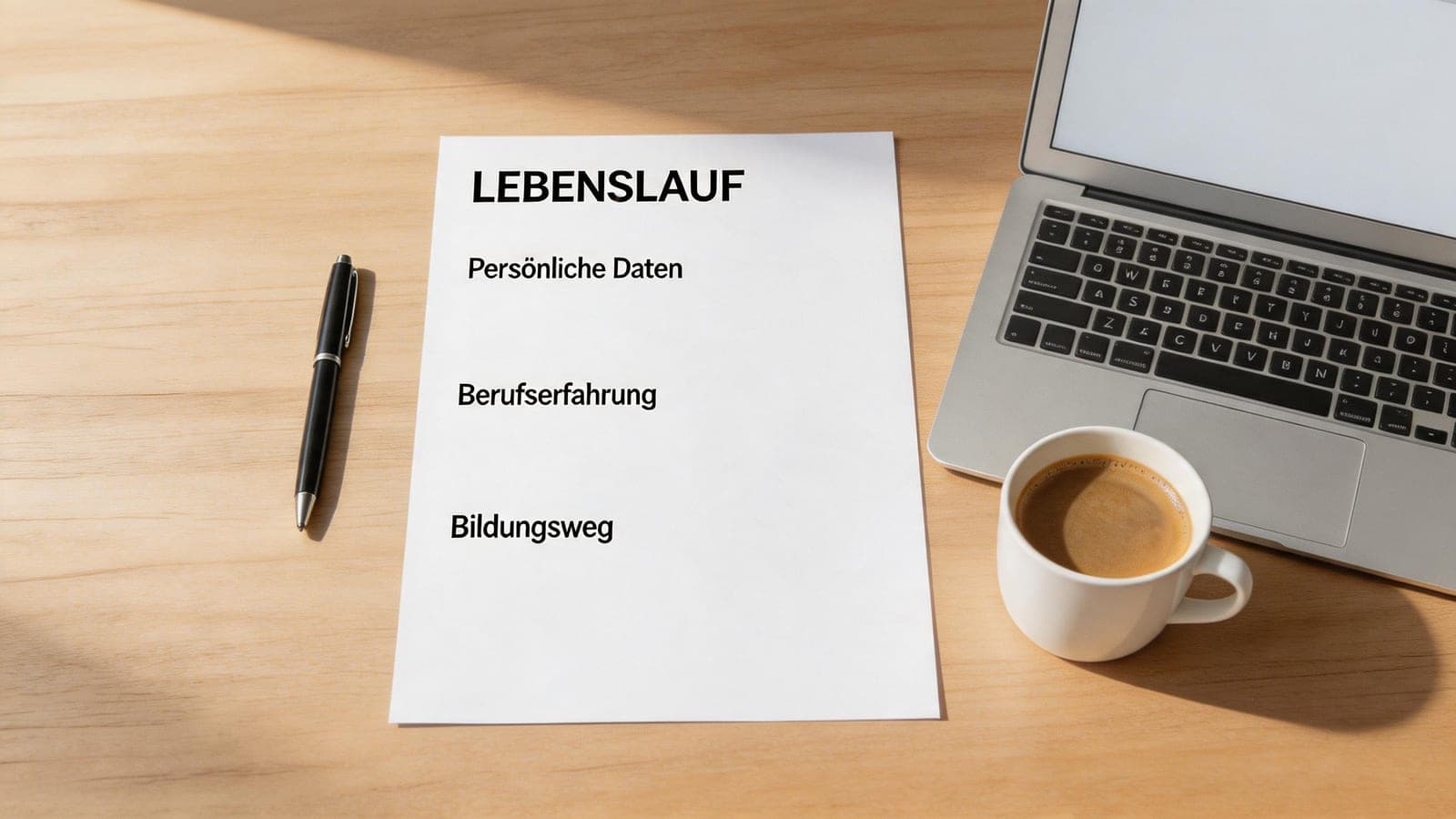
The Lebenslauf (CV) is the heart of your application. It is always required. The German Lebenslauf has a strict, tabular format and is typically no longer than two pages. It presents facts about your professional history in reverse chronological order (most recent experience first).
- Signature: A German Lebenslauf must be signed. At the end of the document, you must include the place, the current date, and your signature. For digital applications, a scanned or high-quality digital signature is expected.
- Photo: While legally optional, a professional photo (Bewerbungsfoto) is traditionally placed in the top right corner of the first page.
- Content: It includes personal data, work experience, education, and skills. There are no career objectives or personal summaries.
Proving Your Skills: Certificates and References
German employers value proof. Your application must include documents that support the claims you make in your CV. These are broadly called Zeugnisse (certificates or testimonials).
Educational Diplomas and Certificates
You should include copies of your most important educational qualifications. You do not need to include every certificate you have ever received. Focus on the most relevant and highest-level ones.
- University Degree (Hochschulzeugnis): If you have a university degree, this is the most important educational document to include.
- Vocational Training Diploma (Berufsschulzeugnis): If you completed a formal vocational training program, include this diploma.
- High School Diploma (Schulabschlusszeugnis): Generally, you only need to include this if you do not have a higher qualification like a university degree.
All foreign documents must be accompanied by a certified German translation.
Work References (Arbeitszeugnisse)
This is a concept that is unique to the German-speaking world. An Arbeitszeugnis is a formal reference letter that every employee in Germany is legally entitled to receive from their employer at the end of their employment. It is not a simple letter of recommendation; it is a detailed evaluation of your performance and conduct.
These documents use a special coded language called Zeugnissprache. While the language sounds positive, specific phrases correspond to school-like grades. For example:
- "stets zu unserer vollsten Zufriedenheit" means "always to our fullest satisfaction" (Grade 1 - Excellent).
- "stets zu unserer vollen Zufriedenheit" means "always to our full satisfaction" (Grade 2 - Good).
- "zu unserer vollen Zufriedenheit" means "to our full satisfaction" (Grade 3 - Average).
- "zu unserer Zufriedenheit" means "to our satisfaction" (Grade 4 - Sufficient/Poor).
Essential Documents for Foreign Applicants
As a migrant applying for a job in Germany, there are two additional categories of documents that are extremely important: proof of your qualifications' validity and proof of your right to work.
Recognition of Foreign Qualifications (Anerkennung)
The Anerkennung is the official document that certifies your foreign professional or academic qualification is equivalent to a German one. For many professions, especially regulated ones like doctors, nurses, and engineers, this is mandatory. For non-regulated professions, it is highly recommended as it gives employers confidence in your credentials.
The process is handled by different authorities depending on the qualification:
- Academic Degrees: The Central Office for Foreign Education (ZAB) provides a Statement of Comparability.
- Vocational Qualifications: The Chambers of Commerce and Industry (IHK) or Chambers of Crafts (Handwerkskammer) are often responsible.
The recognition process can take several months, so you should start it as early as possible. Official government portals like `Make-it-in-Germany.com` and `Anerkennung-in-Deutschland.de` provide detailed information.
Residence and Work Permits (Aufenthaltstitel / Arbeitserlaubnis)
You must have the legal right to work in Germany. While you might not include your permit in the very first application, employers will ask for it during the hiring process. If you already have a valid Aufenthaltstitel (residence permit) that includes an Arbeitserlaubnis (work permit), it is a significant advantage.
EU citizens do not need a work permit. Non-EU citizens typically need a specific visa or residence permit, such as an EU Blue Card or a skilled worker visa. Mentioning your permit status in your cover letter can be helpful to clarify your eligibility immediately.
Common Mistakes to Avoid
A small mistake can get your application rejected before it is even read. Avoid these common errors:
- Sending Multiple Files: Always combine everything into one single PDF. Do not attach your CV, cover letter, and certificates as separate files.
- Using the Wrong File Format: Only send PDFs. Do not send Word documents (.doc, .docx) or image files (.jpg), as they can appear unprofessional and may have formatting issues on different computers.
- Forgetting the Signature: An unsigned Lebenslauf is considered incomplete and unprofessional in Germany. Always add your place, date, and signature.
- Not Tailoring Your Application: Sending the same generic Anschreiben and Lebenslauf to dozens of companies is ineffective. Customize your cover letter for every single application to show genuine interest.
- Including Irrelevant Documents: Do not include your primary school certificate or a certificate for a one-day course you took ten years ago. Only include documents that are relevant to the job you are applying for.