When you apply for a job in Germany, you will encounter a specific set of German words. Translation apps can help, but they often miss the professional context. Knowing these key terms yourself allows you to navigate job portals, understand contracts, and communicate with HR departments effectively. It shows employers that you are serious about working in Germany.
This guide provides a focused list of essential German vocabulary for the job application process. We have grouped the words into logical categories, from the documents you need to prepare to the terms you will find in your work contract. Think of this as your professional phrasebook for finding a job in Germany.
The Application Package (Bewerbungsunterlagen)
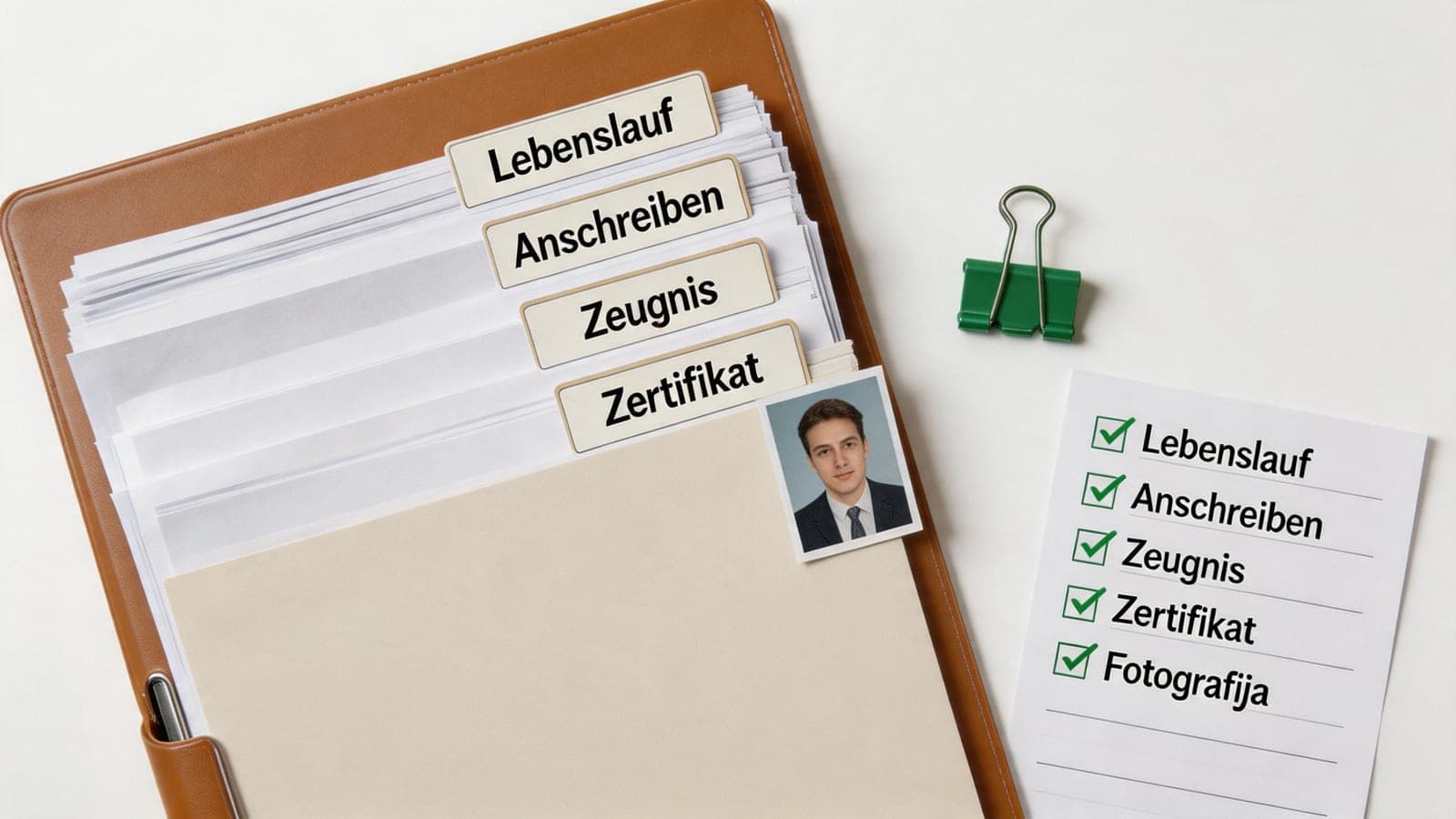
Your job application, or Bewerbung, is more than just a CV. It is a complete package of documents, known as Bewerbungsunterlagen. German employers expect a professional and complete submission. The following terms describe the core components of your application.
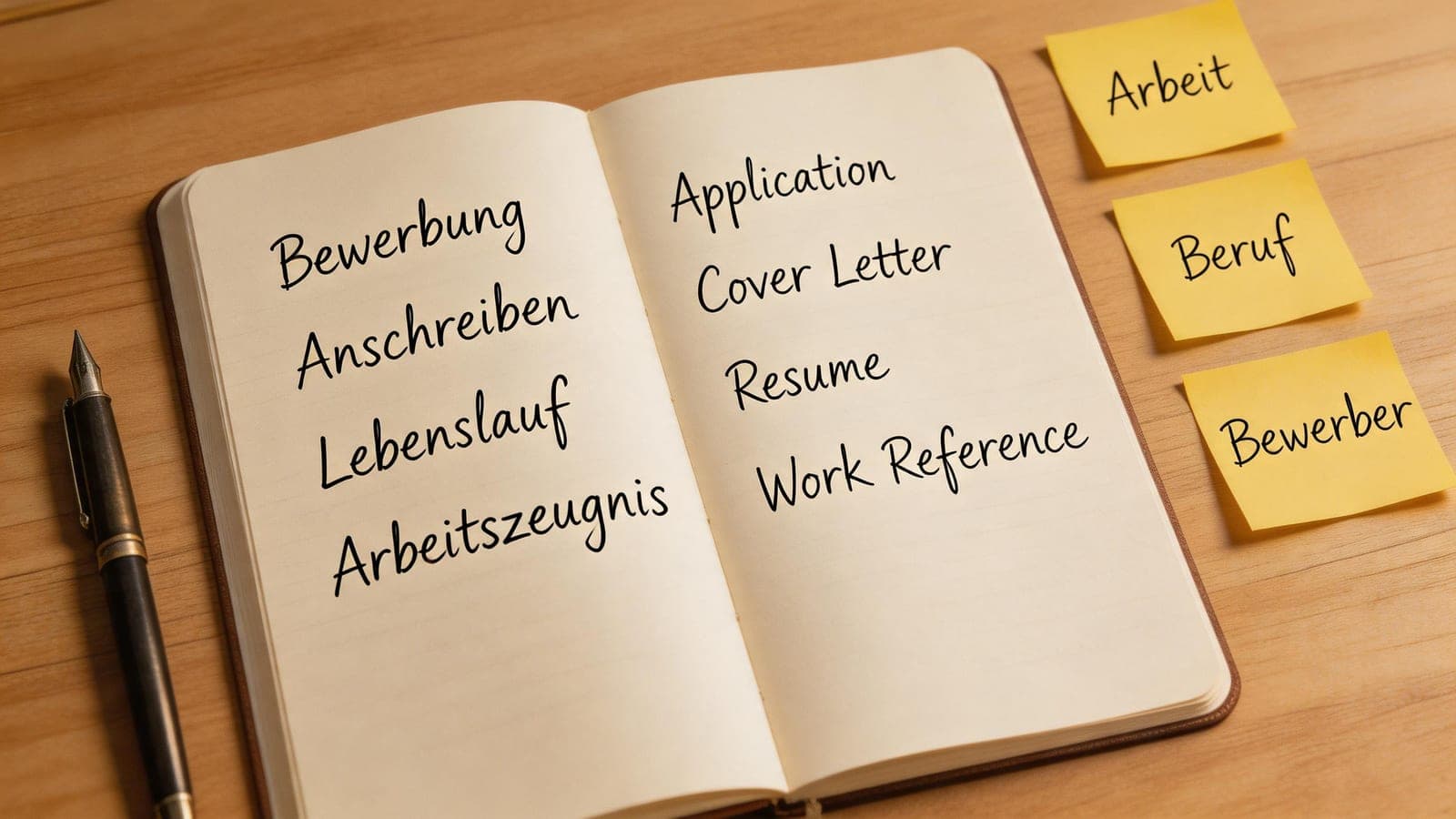
- Bewerbung: This means 'application'. It refers to the entire process and the set of documents you submit.
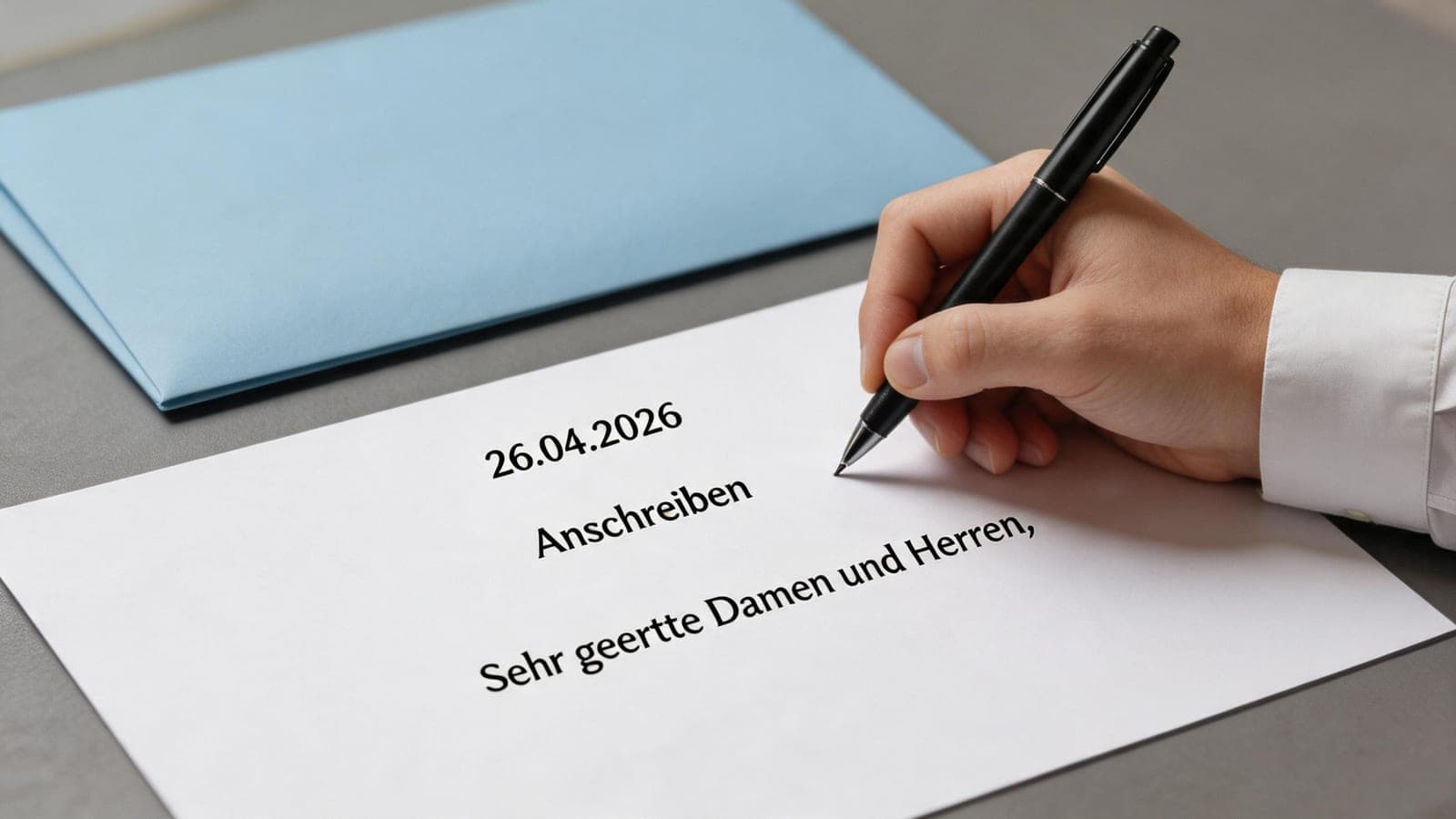
- Anschreiben: This is the cover letter. It is a formal, one-page document explaining your motivation for the specific role.
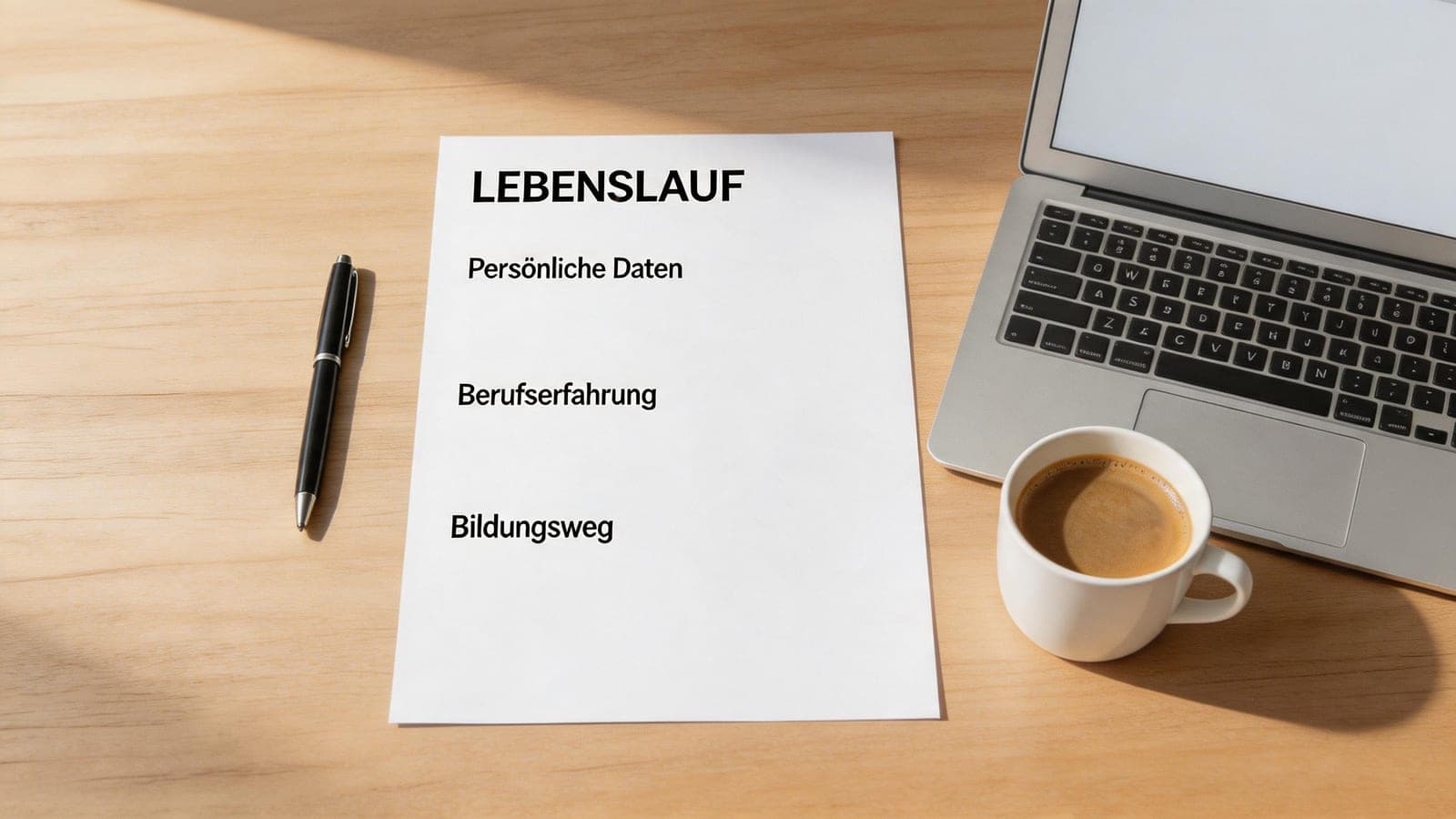
- Lebenslauf: The German word for a CV or resume. It is typically a tabular document, no longer than 2 pages.
- Bewerbungsfoto: This is the application photo. While not legally required, a professional photo is still expected by most employers.
- Anlagen: This word means 'attachments' or 'enclosures'. It refers to all the supporting documents you include, such as certificates and references.
- Unterlagen: A more general term for 'documents'. You will often see requests like "Senden Sie uns Ihre vollständigen Unterlagen" (Send us your complete documents).
- Deckblatt: An optional cover page for your application. It includes your name, contact details, the position you are applying for, and your photo.
Decoding German Job Postings (Stellenanzeigen)
When you search for jobs, you will read many job advertisements, or Stellenanzeigen. These documents use standard vocabulary to describe the role and the ideal candidate. Understanding these terms helps you quickly identify if a job is a good fit for you.
- Stellenanzeige: This means 'job advertisement' or 'job posting'.
- Voraussetzungen: This translates to 'prerequisites' or 'requirements'. This section lists the essential qualifications you must have.
- Aufgaben: This word means 'tasks' or 'responsibilities'. It describes what you will be doing in the job.
- Anforderungen: This means 'demands' or 'profile'. It describes the skills and personal qualities the employer is looking for.
- Berufserfahrung: This means 'professional experience' or 'work experience'. Job ads often specify the number of years required.
- Qualifikation: This is your 'qualification'. It can refer to both your formal education and your professional skills.
- Referenznummer: The 'reference number' for the job posting. Always include this in your application so the company can assign it correctly.
Education and Qualifications (Bildung und Qualifikationen)
You must prove your skills with documents. This section covers the vocabulary used to describe your educational background and professional credentials. These terms are crucial for the Lebenslauf.
- Berufsausbildung: This refers to 'vocational training' or an apprenticeship, a very common and respected educational path in Germany.
- Studium: This means '(university) studies'. It refers to academic education at a university or college.
- Abschluss: Your 'degree' or 'diploma' from a school or university.
- Zeugnis: A 'certificate', 'diploma', or 'report card'. You will have a Schulabschlusszeugnis (school leaving certificate) and an Arbeitszeugnis.
- Arbeitszeugnis: A 'work reference' or 'testimonial' from a previous employer. This is a very important document in Germany.
- Zertifikat: A 'certificate' that proves you completed a specific course or have a certain skill, like a language certificate.
- Sprachkenntnisse: This means 'language skills'. You list these on your CV with your proficiency level (e.g., B1, C2).
Understanding Work Conditions (Arbeitsbedingungen)
These words define the structure of your employment. You will find them in the job posting and, later, in your work contract. It is critical to understand them before you accept an offer.
- Arbeitsvertrag: The 'employment contract'. This is the legal document that outlines all conditions of your job.
- Vollzeit: 'Full-time' employment, which in Germany is typically 35-40 hours per week.
- Teilzeit: 'Part-time' employment, meaning any number of hours less than full-time.
- Schicht / Schichtarbeit: 'Shift' or 'shift work'. This indicates that the job does not have standard 9-to-5 working hours.
- Schichtbereitschaft: This means 'willingness to do shift work'. If a job ad lists this, you must be flexible with your working hours.
- Einsatzort: The 'place of work' or 'location' where you will be working.
- Probezeit: The 'probationary period'. This is typically the first 3 to 6 months of employment, during which the notice period is shorter.
- Kündigungsfrist: The 'notice period' required to terminate the employment contract, for both you and the employer.
Talking About Salary (Gehalt und Lohn)
Money is an important topic. German business culture is direct, and you will need this vocabulary to discuss your salary expectations and understand your pay slip.
- Gehalt: This refers to a fixed monthly 'salary', common for white-collar jobs.
- Lohn: This is an hourly 'wage', common for manual or blue-collar jobs.
- Brutto: 'Gross' salary, the amount before taxes and social security contributions are deducted.
- Netto: 'Net' salary, the actual amount you receive in your bank account after all deductions.
- Stundenlohn: The 'hourly wage'.
- Gehaltsvorstellung: Your 'salary expectation'. Many job applications will ask you to state this in your cover letter.
- Urlaubstage: The number of 'vacation days' or 'paid holidays' you are entitled to per year. The legal minimum is 20 days for a 5-day work week.
Permits and Legal Status (Aufenthalt und Arbeitserlaubnis)
For non-EU citizens, navigating the legal requirements is a key part of the job search. These terms are used by the immigration office (Ausländerbehörde) and potential employers.
- Aufenthaltstitel: The 'residence permit', the official document that allows you to live in Germany.
- Arbeitserlaubnis: The 'work permit'. This is often part of your residence permit and specifies if and how you are allowed to work.
- Anerkennung: The official 'recognition' of your foreign professional qualifications. This is a formal process required for many regulated professions like doctors or engineers.
- Visum: The 'visa' you need to enter Germany from a non-EU country to look for a job or start working.
- Blue Card (Blaue Karte EU): A specific type of residence permit for highly qualified non-EU citizens.
Complete Vocabulary Reference Table
Here is a complete list of all the terms discussed in this article. You can use this table as a quick reference during your job search.
| Deutsch | English Translation | Example Sentence (German) |
|---|---|---|
| Anforderungen | Requirements / Demands | Welche Anforderungen stellt das Unternehmen an die Bewerber? |
| Anlagen | Attachments / Enclosures | Bitte fügen Sie Ihre Zeugnisse als Anlagen bei. |
| Anschreiben | Cover Letter | Das Anschreiben sollte nicht länger als eine Seite sein. |
| Anerkennung | Recognition (of qualifications) | Die Anerkennung meiner ausländischen Diplome ist abgeschlossen. |
| Abschluss | Degree / Diploma | Ich habe einen Master-Abschluss in Informatik. |
| Arbeitserlaubnis | Work Permit | Besitzen Sie eine gültige Arbeitserlaubnis für Deutschland? |
| Arbeitsvertrag | Employment Contract | Bitte lesen Sie den Arbeitsvertrag sorgfältig durch. |
| Arbeitszeugnis | Work Reference / Testimonial | Mein ehemaliger Arbeitgeber hat mir ein sehr gutes Arbeitszeugnis ausgestellt. |
| Aufenthaltstitel | Residence Permit | Ein gültiger Aufenthaltstitel ist für diese Stelle erforderlich. |
| Aufgaben | Tasks / Responsibilities | Die Aufgaben umfassen Kundenbetreuung und Datenanalyse. |
| Berufsausbildung | Vocational Training | Er hat eine Berufsausbildung zum Mechatroniker gemacht. |
| Berufserfahrung | Professional Experience | Für diese Position ist mehrjährige Berufserfahrung notwendig. |
| Bewerbung | Application | Bitte senden Sie Ihre vollständige Bewerbung per E-Mail. |
| Bewerbungsfoto | Application Photo | Ein professionelles Bewerbungsfoto ist von Vorteil. |
| Blue Card (Blaue Karte EU) | Blue Card | Als IT-Spezialist können Sie eine Blaue Karte EU beantragen. |
| Brutto | Gross (salary) | Das angegebene Gehalt ist ein Brutto-Jahresgehalt. |
| Deckblatt | Cover Page | Ein Deckblatt ist optional, kann aber die Bewerbung aufwerten. |
| Einsatzort | Place of Work / Location | Der Einsatzort ist unsere Zentrale in Frankfurt. |
| Gehalt | Salary (monthly) | Das Gehalt wird immer am Ende des Monats gezahlt. |
| Gehaltsvorstellung | Salary Expectation | Bitte geben Sie Ihre Gehaltsvorstellung im Anschreiben an. |
| Kündigungsfrist | Notice Period | Die gesetzliche Kündigungsfrist beträgt vier Wochen. |
| Lebenslauf | CV / Resume | Ihr Lebenslauf sollte klar strukturiert und lückenlos sein. |
| Lohn | Wage (hourly) | Der Lohn wird wöchentlich ausgezahlt. |
| Netto | Net (salary) | Was bleibt von meinem Bruttogehalt netto übrig? |
| Probezeit | Probationary Period | Die Probezeit dauert in der Regel sechs Monate. |
| Qualifikation | Qualification | Welche Qualifikationen bringen Sie für die Stelle mit? |
| Referenznummer | Reference Number | Geben Sie bitte die Referenznummer im Betreff an. |
| Schicht / Schichtarbeit | Shift / Shift Work | Wir arbeiten im Drei-Schicht-System. |
| Schichtbereitschaft | Willingness to do shift work | Für diese Position ist Schichtbereitschaft erforderlich. |
| Sprachkenntnisse | Language Skills | Gute Englischkenntnisse sind erforderlich. |
| Stellenanzeige | Job Advertisement | Ich habe Ihre Stellenanzeige auf einer Job-Plattform gesehen. |
| Studium | (University) Studies | Sie hat ihr Studium an der Technischen Universität München abgeschlossen. |
| Stundenlohn | Hourly Wage | Der Mindest-Stundenlohn in Deutschland liegt bei über 12 Euro. |
| Teilzeit | Part-time | Die Stelle kann auch in Teilzeit besetzt werden. |
| Unterlagen | Documents | Senden Sie uns Ihre vollständigen Bewerbungsunterlagen. |
| Urlaubstage | Vacation Days | Der Vertrag beinhaltet 30 Urlaubstage pro Jahr. |
| Voraussetzungen | Prerequisites / Requirements | Eine der Voraussetzungen ist ein abgeschlossenes Studium. |
| Visum | Visa | Für die Einreise benötigen Sie ein nationales Visum. |
| Vollzeit | Full-time | Wir bieten eine Vollzeitstelle mit 40 Stunden pro Woche. |
| Zeugnis | Certificate / Diploma / Report | Bitte legen Sie eine Kopie Ihres Schulabschlusszeugnisses bei. |
| Zertifikat | Certificate | Ich habe ein Zertifikat für einen Deutschkurs auf B2-Niveau. |